
Dry Needling in Seattle
Reduce Pain. Improve Muscle Function. Move Better.
Pain, muscle tightness, or difficulty activating a muscle can sometimes get in the way of your recovery—even when you're doing all the right things.
Dry needling is one of the tools our physical therapists at Stride Physio in Seattle may use to help reduce pain, address muscle and movement dysfunction, and help you move more comfortably and confidently.
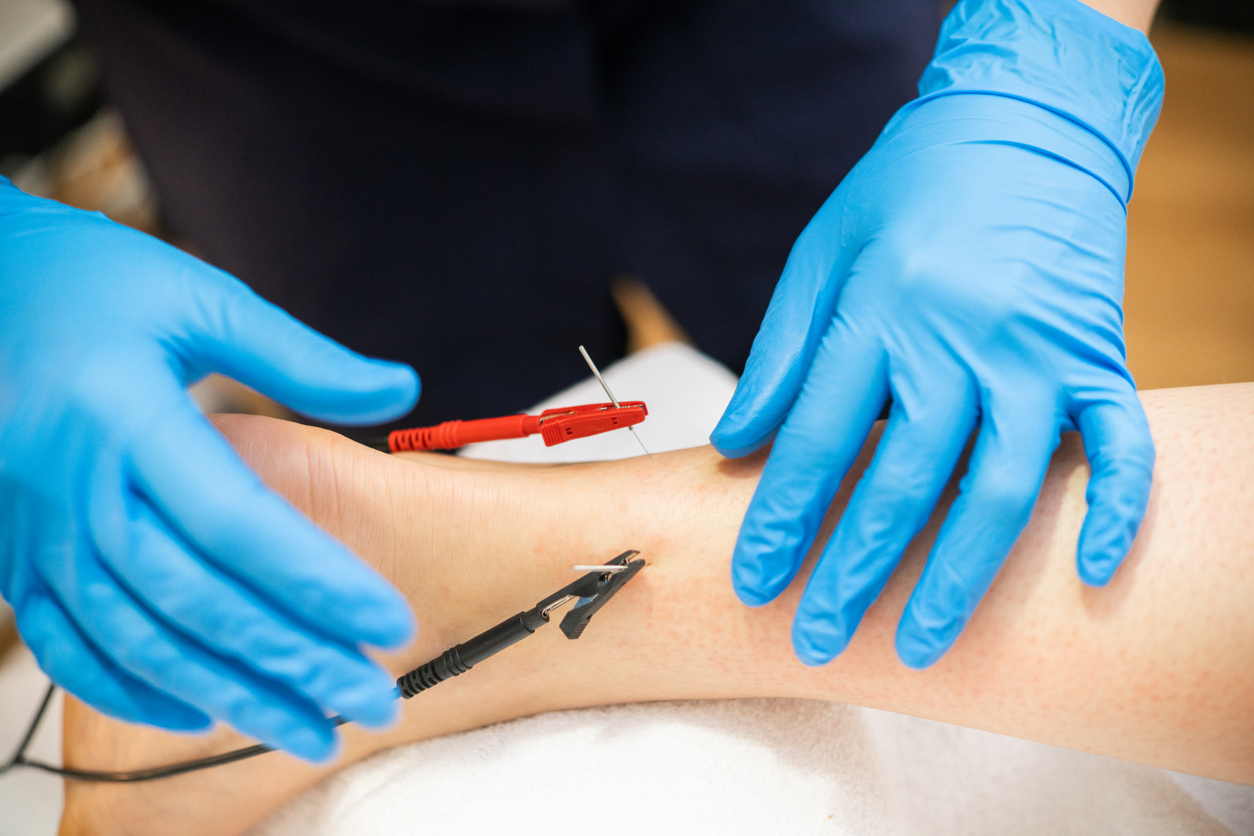
Also called intramuscular needling, dry needling uses a very thin, sterile needle to stimulate muscular and connective tissues. At Stride, dry needling is never used as a stand-alone treatment. Instead, your physical therapist may incorporate it into a comprehensive treatment plan that includes movement, targeted exercise, hands-on treatment, education, and strategies designed around your goals.
Our goal isn't simply to make something feel better temporarily. We use dry needling when it may help create an opportunity for better movement—and then reinforce that change through exercise and movement.
What Is Dry Needling?
Dry needling is a skilled physical therapy intervention in which a specially trained physical therapist inserts a thin, sterile filiform needle through the skin to stimulate underlying muscular and connective tissues.
Based on your physical therapy evaluation, dry needling may be used to help:
- Reduce pain and muscle sensitivity
- Decrease excessive muscle tension
- Improve muscle activation
- Improve mobility and movement
- Address neuromuscular and movement impairments
- Support recovery from injury
- Improve function and physical performance
Dry needling isn't appropriate for every person or every condition. Your physical therapist will determine whether it makes sense based on your symptoms, movement, health history, and goals.
What Can Dry Needling Help With?
Dry needling may be considered for a variety of musculoskeletal and neuromuscular concerns involving pain, muscle sensitivity or tightness, altered muscle recruitment, or movement dysfunction.
Rather than deciding whether you need dry needling based on a diagnosis alone, your physical therapist will evaluate how you're moving, what may be contributing to your symptoms, and what treatment approach is most appropriate for you.
Research suggests dry needling may provide pain relief and improvements in function for some musculoskeletal conditions, although results vary depending on the condition and the individual.
At Stride, we use dry needling selectively as one tool within a broader rehabilitation program rather than relying on it alone.
Dry Needling + Movement: The Stride Approach
At Stride, we don't treat a painful muscle in isolation. We want to understand why you're hurting, how you're moving, and what's keeping you from doing the things you want to do.
That's why dry needling starts with a physical therapy evaluation.
Your therapist may identify an area that is overly sensitive or tense, a muscle that isn't recruiting effectively, or another neuromuscular or movement impairment that may be contributing to your symptoms.
When appropriate, dry needling can be one tool used to address that impairment.
Then, we move.
Following dry needling, your therapist may incorporate mobility work, strengthening, neuromuscular retraining, or functional movement to help translate changes from treatment into meaningful improvements in how you move and function.
Think of dry needling as a tool or catalyst—not the entire solution.
Is Dry Needling the Same as Acupuncture?
No. Dry needling and acupuncture are distinct healthcare practices.
They may look similar because both use thin, sterile filiform needles, but they are performed within different professional scopes and systems of clinical reasoning.
Dry needling performed by a physical therapist is based on a physical therapy examination and uses knowledge of anatomy, physiology, pain science, movement, and the neuromusculoskeletal system. Treatment areas are selected based on your symptoms, muscle function, movement impairments, and rehabilitation goals.
Acupuncture is performed within a different professional scope and system of examination, diagnosis, and clinical reasoning.
At Stride Physio, dry needling is incorporated into your physical therapy plan of care when your therapist believes it may help address pain or movement dysfunction and support your functional goals.
Who Can Perform Dry Needling in Washington State?
In Washington State, physical therapists must obtain a specific intramuscular needling endorsement from the Washington State Department of Health before performing dry needling.
The endorsement requires advanced education and clinical training in areas including anatomy and physiology, pain mechanisms, needling technique, indications and contraindications, safety, management of adverse events, informed consent, and practical competency.
Washington also requires extensive clinical review before a physical therapist can qualify for the endorsement.
Stride's dry needling physical therapists have completed the required advanced training and endorsement because we believe our patients should have access to a broad range of evidence-informed treatment options when appropriate.
What Does Dry Needling Feel Like?
The needles used for dry needling are extremely thin, and you may feel very little as the needle enters the skin.
Once the targeted tissue is reached, sensations vary. You may experience:
- Pressure
- A dull ache
- A brief muscle twitch
- A temporary cramping sensation
Your therapist will communicate with you throughout treatment and can modify or stop the technique at any time.
Some people experience temporary muscle soreness afterward, similar to what you might feel following a challenging workout.
Is Dry Needling Safe?
Dry needling is generally well tolerated when performed by an appropriately trained physical therapist, but like any procedure that penetrates the skin, it has potential risks and side effects.
Common and generally mild effects may include temporary soreness, bruising, discomfort, fatigue, dizziness, or sweating. Less common complications are also possible.
Before treatment, your physical therapist will review your health history, determine whether dry needling is appropriate for you, explain the potential benefits and risks, and obtain your informed consent.
Be sure to tell your therapist about relevant medical conditions, medications such as blood thinners, pregnancy, immune system concerns, previous surgeries, metal sensitivities, or implanted medical devices.
Dry needling is always optional. If you prefer not to receive it, your therapist can discuss other treatment approaches with you.
How Much Does Dry Needling Cost at Stride Physio?
Dry needling is performed as part of your physical therapy visit and is not offered as a stand-alone service.
Many insurance plans do not separately cover or reimburse for dry needling. If your physical therapist recommends it as part of your treatment, there may be an additional out-of-pocket charge of $40–$50 per session, depending on the number of areas treated.
We'll discuss the recommendation and cost with you before treatment so you can decide whether you'd like to include dry needling in your care.
Dry Needling FAQ
Do I need a separate appointment for dry needling?
Usually, no. Dry needling is incorporated into your physical therapy visit when your therapist determines that it is appropriate for your plan of care. It is not offered as a stand-alone treatment at Stride.
Is dry needling acupuncture?
No. Although both practices use thin filiform needles, dry needling performed by a physical therapist and acupuncture are distinct practices with different professional scopes, examinations, clinical reasoning, and treatment frameworks.
Does dry needling hurt?
Experiences vary. You may barely notice the needle entering the skin, but stimulation of the targeted tissue can sometimes cause a brief twitch, ache, pressure, or cramping sensation. Your therapist will communicate with you throughout treatment.
Will I be sore after dry needling?
You may experience temporary soreness or achiness in the treated area, similar to what you might feel after exercise. Some people experience little or no post-treatment soreness.
How many dry needling treatments will I need?
There isn't a standard number of sessions.
Your therapist will monitor how you respond and determine whether dry needling is helping you progress toward your functional goals. Your response to exercise, movement, and other parts of your treatment plan will also guide whether continuing dry needling makes sense.
Is dry needling safe for everyone?
No treatment is appropriate for everyone. Certain medications, medical conditions, pregnancy, immune system concerns, previous surgeries, implanted devices, and other factors may affect whether or how dry needling is performed.
Your physical therapist will screen for these considerations before treatment.
Why does Stride combine dry needling with exercise?
Our goal isn't simply to change how a muscle feels while you're on the treatment table. We want treatment to help you move better, function better, and return to the activities that matter to you.
Dry needling may help address pain or muscle activity for some people, while movement and exercise help build strength, mobility, coordination, and capacity.
That's why we view dry needling as one tool within rehabilitation—not the rehabilitation itself.
Will insurance cover dry needling?
Many insurance plans do not cover dry needling separately.
If dry needling is recommended as part of your physical therapy care at Stride, there may be an additional out-of-pocket charge of $40–$50, depending on the number of areas treated. We'll discuss any additional cost with you before proceeding.
Do I have to receive dry needling if my therapist recommends it?
Absolutely not.
Dry needling requires your consent. Your therapist will explain why they believe it may be useful, answer your questions, and discuss alternatives. You can decline or withdraw consent at any time.
Curious Whether Dry Needling Could Help You?
The best treatment isn't simply the newest technique or the one with the most buzz. It's the treatment that makes sense for your body, your goals, and what we find during your evaluation.
At Stride Physio in Seattle, our physical therapists combine individualized exercise and movement with evidence-informed treatment options such as dry needling, hands-on care, movement analysis, and education to help you make meaningful progress.
Schedule a physical therapy appointment at Stride Physio to find out whether dry needling could be a useful part of your treatment plan.